Enterprise-grade search intelligence, free to start and $19.99 for full depth.
Search intelligence for publishers and affiliate operators

Build a publishing system where every page has a reason to exist.

SearchSignal connects demand research, competitor gaps, Search Console performance, audits, backlinks, briefs, and AI agents in one project-aware operating loop.

01 · Source-awareKnow where the evidence came from.Measured performance, crawl findings, licensed metrics, and saved research remain distinguishable.
02 · Project-scopedKeep context attached to the workspace.Domains, audits, lists, priorities, and history stay connected instead of becoming another export.
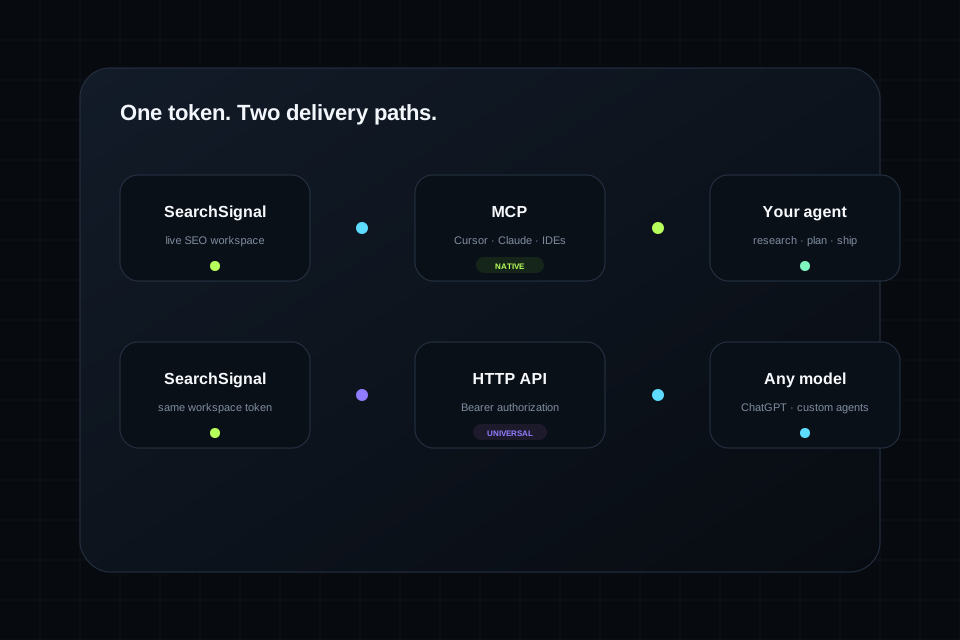
03 · Agent-deliveredCall the workspace through MCP or HTTP.Use the same authorized evidence in Cursor, Claude, ChatGPT, Windsurf, VS Code, and custom agents.
04 · Human-reviewableInspect the decision before it ships.The interface remains available while the agent handles retrieval, synthesis, and handoff.
The operating problem

Publishing volume is easy to automate. Editorial judgment is not.

An AI-first publisher can generate more pages than a site should ever index. The durable advantage is choosing the right intent, consolidating overlap, building useful clusters, strengthening internal links, maintaining technical quality, and updating pages when real performance shows an opening or decline.
  • One current project workspace instead of scattered exports
  • Prioritized opportunities instead of undifferentiated issue lists
  • MCP and HTTP delivery instead of repeated screenshot handoffs
  • Human review when needed, agent retrieval when speed matters
  • Free entry point with a clear path to deeper licensed data
SearchSignal connecting an SEO workspace to AI agents through MCP and HTTP
Jobs to be done

Use SearchSignal where it removes the most friction.

The product is strongest when it compresses a multi-tab research task into a reliable briefing and a concrete next action.

Prioritize the editorial queue

Rank clusters by relevance, realistic difficulty, commercial value, existing coverage, and the site's current authority.

Prevent content overlap

Identify competing pages, intent collisions, duplicate title groups, and opportunities to merge or reposition content.

Build stronger briefs

Carry SERP patterns, entities, questions, competitors, internal links, and conversion goals into each assignment.

Refresh near-winners

Use Search Console impressions and positions to improve pages that are already close to stronger traffic.

Scale internal links

Turn orphan pages and topic relationships into a consistent editorial and component-level linking system.

Protect technical quality

Keep crawl health, indexability, metadata, canonicals, and template behavior visible as the content library grows.

Recommended operating model

A repeatable loop from evidence to shipped growth.

Phase 0101

Build the opportunity inventory

Combine keyword sets, competitor gaps, current rankings, and business relevance into an ordered editorial map.

Phase 0202

Create evidence-backed briefs

Define the page type, intent, differentiation, structure, entities, links, and update requirements before drafting.

Phase 0303

Publish, measure, refresh

Use the agent to ship within the site's design system, monitor real performance, and update the queue from SearchSignal evidence.

Prompt library

Ask the agent for the deliverable your role actually needs.

SearchSignal retrieves the live project context; the prompt defines the decision, format, and next owner.

Editorial map

“Combine saved keyword lists, competitor gaps, and current site coverage into a 50-page editorial map grouped by intent and dependency.”

Cannibalization

“Find pages likely competing for the same intent. Recommend merge, redirect, reposition, or keep decisions with supporting evidence.”

Refresh queue

“Find pages in positions 4–15 with meaningful impressions and propose the smallest evidence-backed update for each.”

Brief to build

“Create the brief, internal-link plan, and CMS-ready content structure for the next approved page in the cluster.”

Solution FAQ

How publishers use SearchSignal.

Yes. Bulk Analyze is included in the published feature set and supports batch metrics, sorting, filtering, CSV export, and saved lists.

Yes. SearchSignal includes content briefs and an AI Writer with outline, section, revision, and research-context features.

Yes. Google Search Console sync brings clicks, impressions, positions, and property data into the project workspace.

Use MCP to retrieve current research and performance context in the writing or coding agent, but keep editorial approval, fact checking, and quality control in the operating process.

The product behind the page

Every page should have a reason to exist.

Publishers can connect demand, intent, existing performance, authority, internal links, and content history to a repeatable planning and refresh loop.

01Build evidence-backed briefs.
02Protect against intent overlap.
03Verify performance after publication.
SearchSignal visual: Every page should have a reason to exist.
Publishers can connect demand, intent, existing performance, authority, internal links, and content history to a repeatable planning and refresh loop.
Connect once. Ask anywhere.

Build an editorial engine that prioritizes before it generates.

Start with a real project, connect the agent you already trust, and turn the current workspace into an ordered work queue.