
Evidence-first scoring
Each opportunity carries the observations behind the score instead of presenting a mysterious priority number.
SearchSignal converts scattered findings into explicit opportunities with evidence, affected URLs, impact, effort, status, and a verification path—then exposes that queue to the AI environment doing the work.
Most SEO products stop at detection. SearchSignal keeps the evidence attached while ranking the work, so the model sees why an action matters, what it depends on, which URLs are involved, and how the result should be checked.
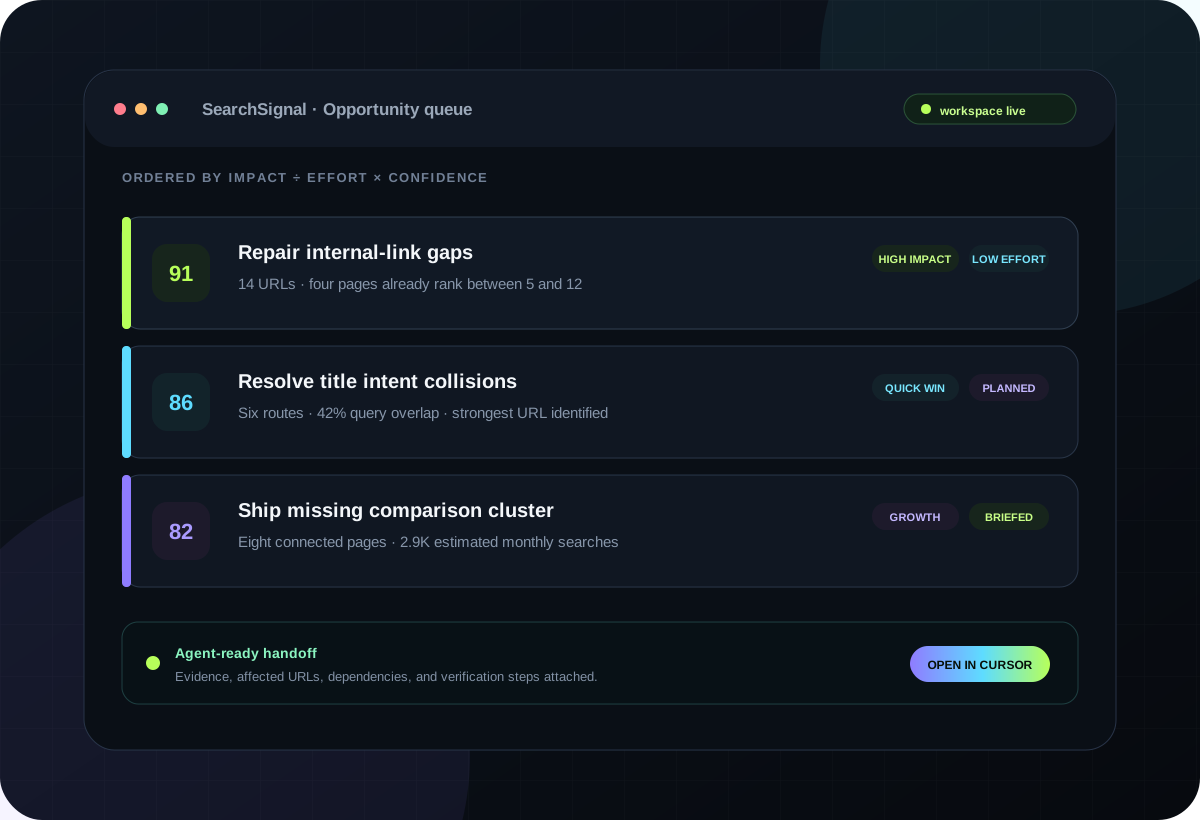
SearchSignal preserves enough detail for a person to review the reasoning and enough structure for a model to turn the result into work.
Each opportunity carries the observations behind the score instead of presenting a mysterious priority number.
See the exact routes, templates, topic hubs, or lost-link targets involved before the work is assigned.
Ask the agent to turn a selected opportunity into files, page edits, dependencies, risks, and acceptance checks.
Keep the queue useful after research by tracking what is approved, assigned, shipped, and verified.
Separate low-effort near-term improvements from larger content, architecture, and authority programs.
Use list_opportunities or a workspace pack so the work queue stays current inside Cursor, Claude, and custom agents.
Run the audit, connect Search Console, save keyword research, and pull the competitor or backlink evidence relevant to the project.
Convert findings into actions with one owner, one scope, one reason, and one measurable definition of done.
Score impact, effort, confidence, urgency, and dependency so the highest-leverage work rises without hiding uncertainty.
Ask for the top opportunities, supporting evidence, and an implementation contract for the selected item.
Apply the change, rerun technical checks, update status, and watch the appropriate search signal over time.
The best prompts name the project, request the supporting evidence, and specify the format of the handoff.
Audit issues are observations. Opportunities translate one or more observations into a prioritized action with context, scope, effort, evidence, and a verification path.
Yes. Compatible MCP clients and authenticated HTTP agents can request the current opportunity list or receive a compact workspace briefing that includes the highest-value work.
No. It is a decision aid based on the available evidence and assumptions. Search outcomes depend on implementation quality, competition, crawl and indexing behavior, demand, and time.
The intended workflow supports explicit work states so research remains connected to assignment, delivery, and verification rather than becoming another static report.
Create a free workspace, connect the client you already use, and put this capability inside the agent workflow.