
Expected impact
Potential effect on indexation, visibility, qualified clicks, conversion intent, or risk reduction.
A useful queue balances expected upside, delivery effort, evidence quality, freshness, and project context. SearchSignal uses that structure to help an agent and a reviewer agree on what belongs first.
The best next action balances upside with delivery reality and evidence quality. That prevents a large audit, keyword set, or backlink export from becoming another unranked backlog.
Potential effect on indexation, visibility, qualified clicks, conversion intent, or risk reduction.
Estimated implementation cost, affected templates, coordination, and verification complexity.
Strength, directness, consistency, and source quality behind the recommendation.
How current the signal is and how well the work aligns with the active project goal.
The example below is presentation data. It shows how reusable delivery, current evidence, and pages already close to page one can raise a technical fix above a broader but less certain idea.
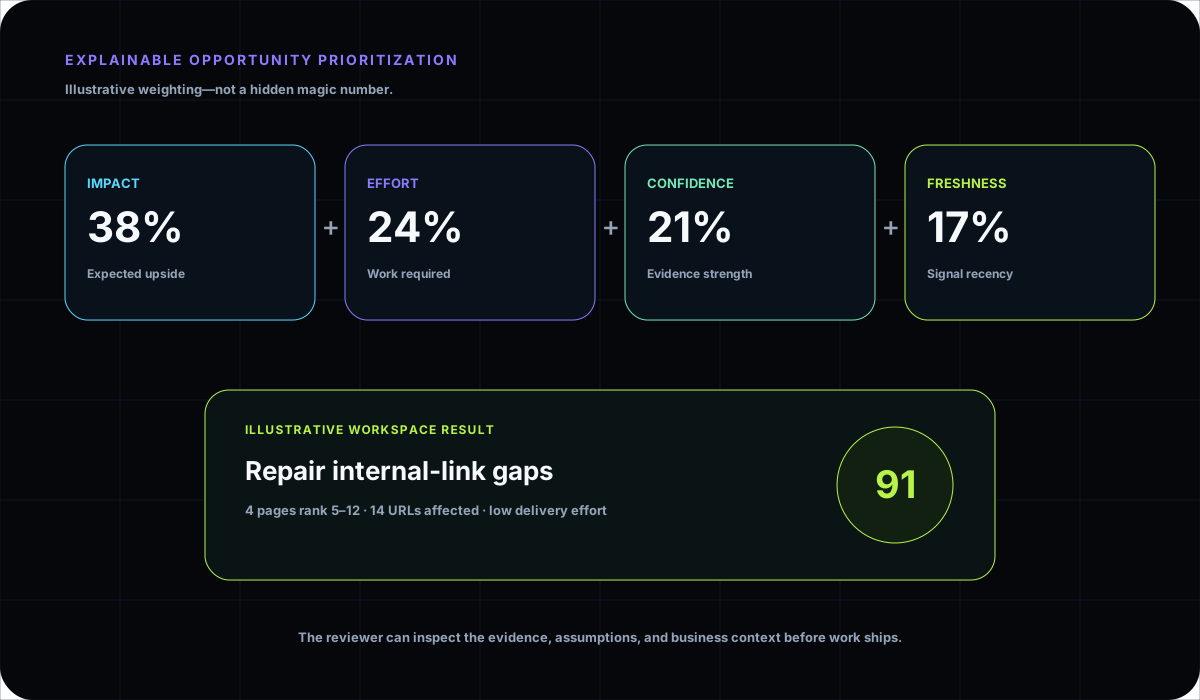
Prioritization is credible only when the evidence, assumptions, and business context remain inspectable and overridable.
| Guardrail | Why it matters | Expected behavior |
|---|---|---|
| Expose supporting evidence | A score without evidence is not defensible. | Attach affected URLs, query movement, source dates, and assumptions. |
| Separate observations from estimates | Search-volume estimates are not direct performance. | Label source type, freshness, and confidence. |
| Allow business overrides | Launches, risk, revenue, and roadmaps can change priority. | Let a person change status and order. |
| Verify after implementation | A completed task is not automatically a successful outcome. | Re-crawl and monitor measured performance. |
Create a workspace, connect one authorized credential, and let the AI retrieve the evidence behind the next action.